
Digital advertising has changed dramatically over the past decade. And if there's one word behind that shift, it's automation. Programmatic advertising now accounts for the majority of global digital ad spend, and that share keeps growing as advertisers move away from manual, negotiation-heavy media buying.
While programmatic advertising has become mainstream, understanding what it actually involves is not always straightforward.
What actually happens when an ad is bought and served within milliseconds? Who decides which ad wins the auction? And how is programmatic marketing really different from the display advertising brands have run for years?
If you have found yourself asking similar questions about programmatic advertising, this article takes a closer look at how it works, what goes on behind the scenes, and why it has become central to modern media buying.
What Is Programmatic Advertising?
At its simplest, programmatic advertising is the automated buying and selling of digital ad space using software and data, instead of manual negotiations between advertisers and publishers.
Picture the old way of doing things: a media buyer calls up a publisher, asks for a quote, goes back and forth on pricing, and eventually signs off on an insertion order.
Programmatic takes much of that manual work out of the process. The software identifies the right audience, evaluates the available inventory, and places a winning bid, all in roughly the time it takes a webpage to load.
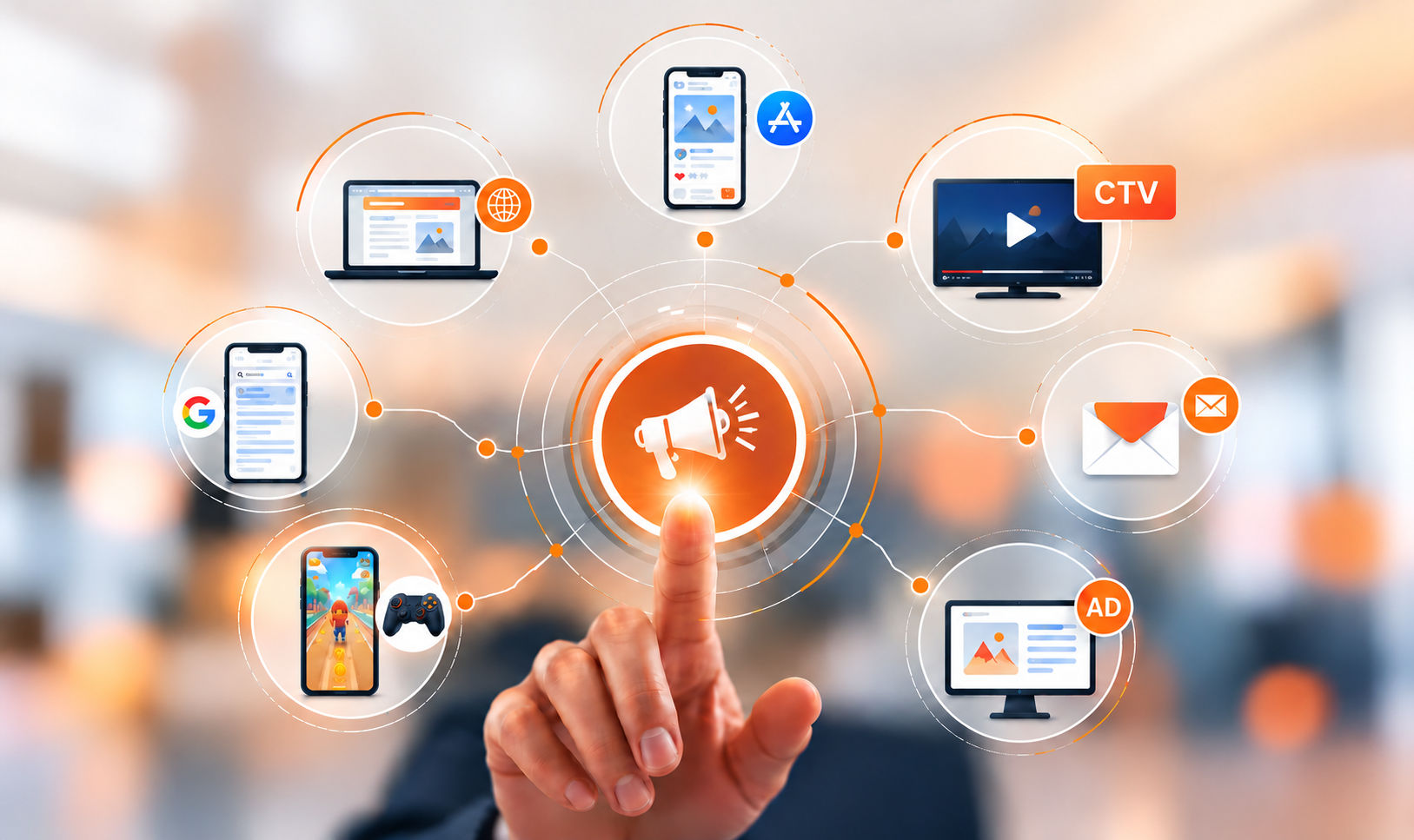
Programmatic ads now run across nearly every digital channel out there: websites, mobile apps, streaming video and audio, connected TV, social platforms, and digital billboards.
Here’s something to keep in mind: programmatic advertising isn't a specific type of ad. Display, video, and native ads can all be bought programmatically. Programmatic is essentially about how these ads are bought, not what they look like.
So, let’s say a travel brand is running a campaign around winter vacation.
It might use programmatic advertising to show video ads to people who recently searched for flights, native ads inside travel blogs, and retargeted display ads to site visitors who browsed but didn't book. Behind all of these placements is the same underlying technology, handling the buying process automatically.
Why Is Programmatic Advertising Important?
So, why has programmatic become the default rather than just one option among many? Several factors have contributed to this shift.
Scale Meets Precision
Digital audiences are scattered across thousands of apps, websites, and streaming platforms. Which means, negotiating placements across all of them manually just isn't realistic anymore. Programmatic makes it possible to reach specific audiences in the right context without buying inventory one deal at a time.
Speed Has Become a Real Competitive Edge
Campaigns that once took weeks to plan, negotiate, and launch can now go live within hours. This is especially essential when a product launch, seasonal trend, or news moment opens a narrow window of relevance. If you miss it, and the moment's gone, and so is the opportunity.
Budgets Are Under Closer Watch Than Ever
Gone are the days when spending on digital advertising was justified by reach and impressions. Today, leadership teams expect real growth, and programmatic's precision targeting and real-time optimization can help connect media investment more closely to measurable business outcomes.
Ad Fraud Has Raised the Stakes
As automation scaled up, so did the need for stronger verification. In response, programmatic platforms have developed more advanced tools to help detect fraud, assess inventory quality and support brand safety.
Decisions Are Backed by Data, Not Guesswork
One of the biggest shifts programmatic has driven is turning media buying into a data-led discipline. Assumptions about audience or placement performance can be tested and adjusted in real time, instead of being validated only after a campaign has already run its course.
Audiences Move Across Screens, and So Does the Strategy
People move between mobile apps, streaming platforms and connected devices throughout the day. Programmatic advertising allows advertisers to build a more connected strategy across these environments, using consistent audience and performance signals rather than treating each channel as a separate silo.
Put simply, programmatic advertising isn't important just because it's automated. It matters because it lets advertisers operate at the scale, speed, and accountability that today's scattered digital landscape demands.
How Programmatic Advertising Works
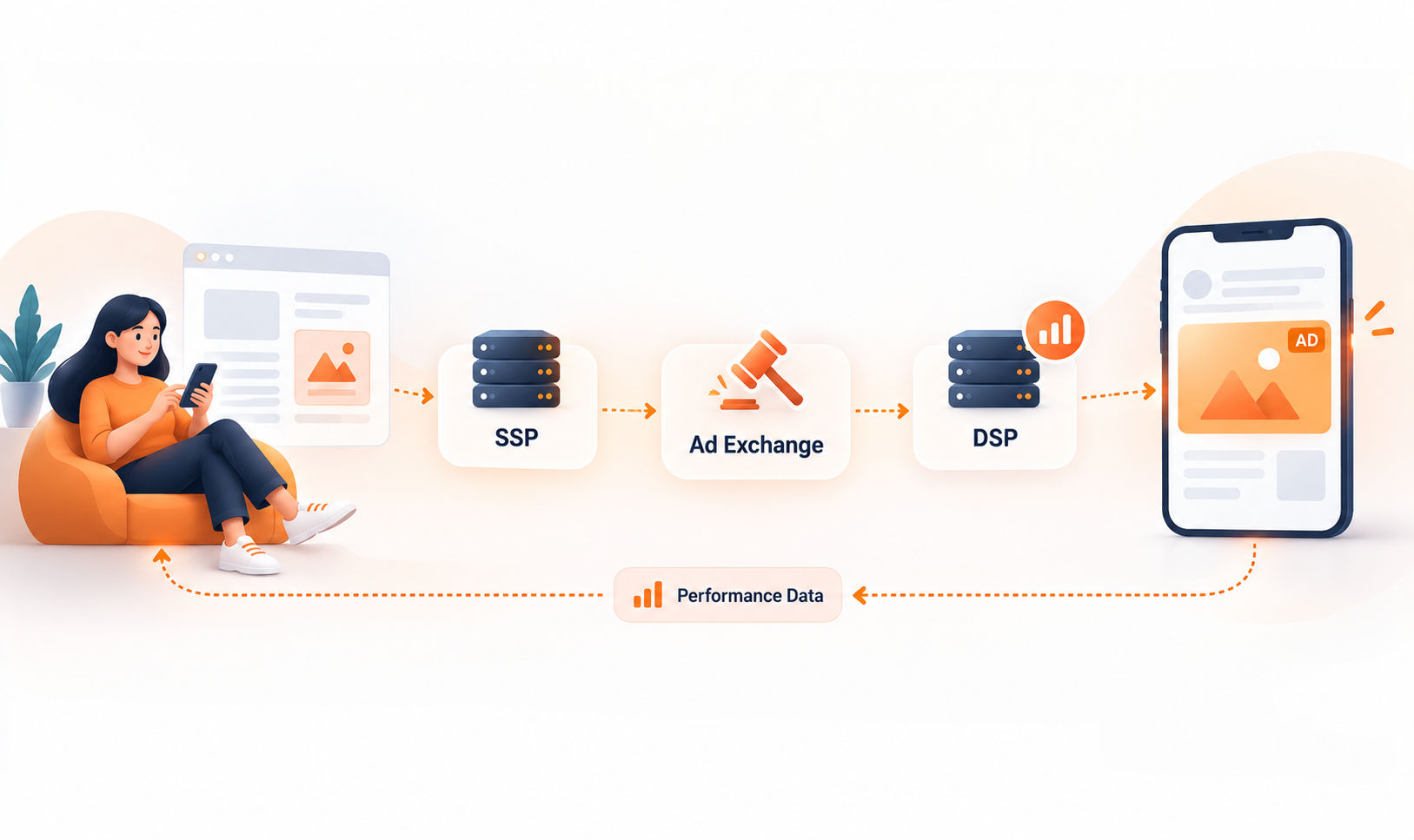
The term programmatic advertising can sound overwhelming at first. But once the process is broken down into a few simple steps, it becomes much easier to see how everything fits together. Most of it happens in real time, with decisions made within milliseconds.
- An ad opportunity becomes available: Someone visits a website or opens an app. The publisher has ad space available, and the moment the page loads, that space becomes available for auction.
- A bid request is generated: A bid request goes out, carrying contextual information about the page or app, along with any audience data the user has consented to share, such as device type, rough location and browsing behavior.
- The ad exchange connects buyers and sellers: The request reaches an ad exchange, essentially a digital marketplace where advertisers and publishers meet. On the publisher side, a Supply-Side Platform or an SSP, makes the available impression accessible to potential buyers.
- The DSP evaluates the opportunity: Advertisers respond through a Demand-Side Platform or DSP. Based on predefined campaign parameters, such as budget, target audience and creative specifications, the DSP determines whether the impression is relevant and, if so, how much to bid.
- An automated auction takes place: The qualifying bids are compared, and the winning bid is selected according to the applicable auction mechanics. This is where Real-Time Bidding or RTB, comes into play, allowing advertisers to compete for individual impressions within milliseconds.
- The winning ad is served: Once the auction is completed, the winning ad is delivered to the available placement, appearing on the page or within the app almost instantly.
- Performance feeds back into the system: The campaign generates performance data, such as clicks, views and conversions. These signals can then inform subsequent bidding and optimization decisions, helping the system become more responsive as the campaign progresses.
None of this runs on fixed rules alone, though. Underneath it all is a layer of machine learning and predictive analytics. Modern programmatic marketing platforms don't just follow set instructions. They continuously learn which combinations of audience, placement, and creative are actually driving results, and shift spend accordingly, often with very little manual intervention after launch.
Essential Components of Programmatic Advertising
Programmatic marketing gets a lot less abstract once the key players in the ecosystem are clear. Each one has a specific job, and knowing how they connect makes the whole picture click.
Demand-Side Platform (DSP)
This is the technology advertisers and agencies use to buy digital ad inventory. A DSP allows marketers to define campaign parameters, such as target audience, budget, bidding strategy and ad format, then evaluates available impressions and places bids across different supply sources.
Supply-Side Platform (SSP)
An SSP works on the publisher side of the ecosystem. It helps website and app owners manage their available ad inventory, connect with potential buyers and determine how that inventory is offered through programmatic channels.
Ad Exchange
An ad exchange connects the supply and demand sides of the ecosystem. It provides a marketplace where publishers can make inventory available and advertisers can compete for individual impressions through automated auctions.
Data Management Platforms and Data Sources
Data helps programmatic platforms make more informed targeting and optimization decisions. Data Management Platforms can organize and activate different types of audience data, while other data sources provide signals around interests, behavior, context and other relevant audience characteristics.
Real-Time Bidding (RTB)
RTB is the auction mechanism used to buy and sell individual ad impressions in real time. It is not a separate platform, but a process that allows eligible advertisers to compete for available inventory and make bidding decisions within milliseconds.
Ad Verification and Measurement Partners
These tools add an important layer of verification to programmatic campaigns. They can help advertisers assess factors such as whether an ad was viewable, whether it reached a genuine audience and whether it appeared in an environment aligned with brand safety requirements.
Publishers and Ad Networks
Publishers own the digital environments where advertising inventory is created, from news websites and content platforms to mobile applications and games. Ad networks take a different approach by bringing inventory from multiple publishers together and making it available to advertisers through a broader pool of supply.
Creative and Ad Serving Technology
Once an impression has been purchased, ad serving technology helps deliver the appropriate creative to the selected placement. Dynamic Creative Optimization can take this a step further by adapting elements such as imagery, messaging or offers based on the audience and context in which the ad is being shown.
Together, these components form the infrastructure that allows programmatic advertising to move from audience signals and media decisions to bidding, ad delivery and measurement, all within a highly automated process.
Benefits of Programmatic Advertising
Now that you know how programmatic advertising works, let’s understand why marketers try to make the most of it.
- Efficiency at Scale: Automation cuts out the manual back-and-forth of traditional media buying, no more RFPs, drawn-out negotiations, or insertion orders for every single placement.
- Sharper Targeting: Ads reach audiences based on behavior, context, device, location, and more, so budgets go toward people genuinely more likely to engage.
- Real-Time Optimization: Since performance data flows back continuously, underperforming placements can be paused and budgets can be shifted towards placements that are delivering stronger results, often within the same day.
- Broader Reach Across Channels: One programmatic campaign can run across display, video, audio, native and connected TV, giving advertisers a more unified way to manage campaigns across channels.
- Transparency and Control: Advertisers can see exactly where their ads ran, what they paid, and what results came out of it, a level of visibility that's tough to get with bulk, manually negotiated buys.
- Cost Efficiency: Dynamic, auction-based pricing generally means advertisers pay closer to true market value for an impression, rather than a flat rate locked in months earlier.
- Flexibility: Campaigns can start small, test what resonates, and scale, or pivot entirely, without being tied to rigid, pre-negotiated contracts.
That said, none of this makes programmatic a “set it and forget it” channel. It still needs strategy, clear KPIs, and regular oversight. But compared to traditional buying, it hands marketing teams a level of control and responsiveness manual processes just can't match.
Types of Programmatic Advertising
Not every programmatic ad gets bought the same way. Depending on how much control, exclusivity, and price certainty an advertiser needs, there are a handful of distinct buying models to choose from.
Real-Time Bidding (Open Auction)
The model most people picture when they hear “programmatic.” Inventory is open to any advertiser, and impressions go to the highest bidder in a live auction. It's fast and accessible, and works well for reaching large audiences at scale, though advertisers give up some control over exactly where their ads show up.
Private Marketplace (PMP)
Think invite-only auction. Publishers curate their inventory and open it to a select group of advertisers, who then bid in a closed environment. It's a step up in confidence around placement quality and brand safety compared to the open auction, while keeping the speed of automated bidding.
Preferred Deals
A publisher offers inventory to one specific advertiser at a fixed, pre-negotiated price, before it ever reaches the open market. No bidding war, and either side can walk away, a lower-commitment route to premium placements.
Programmatic Guaranteed
Programmatic guaranteed skips the auction entirely. Advertisers and publishers agree on price, volume, and placement details upfront, much like a traditional direct buy, except delivery and trafficking still run through programmatic technology.
This approach is generally used for premium, high visibility inventory where securing the impression matters more than getting the lowest possible price. Think of a news publisher’s homepage takeover during a major event, where a brand wants the placement confirmed ahead of time rather than relying on an open auction.
Most mature programmatic marketing strategies actually blend these models, open auctions for broad reach and testing, private marketplaces or guaranteed deals for premium, brand-safe placements where quality outweighs cost.
Conclusion
At first glance, programmatic advertising can seem like a lot to take in. There are DSPs, SSPs, ad exchanges, data signals, auctions and several different ways to buy inventory. But once these pieces are understood, the underlying process is much easier to follow.
Programmatic gives advertisers a way to buy digital media at scale while using data and performance signals to inform those decisions. The different buying models then give advertisers flexibility over how much reach, control, price certainty and inventory access they need.
The technology will keep evolving as new channels, formats and devices become part of the digital advertising ecosystem. What remains important is the ability to understand the fundamentals, choose the right buying model and use performance data to guide decisions throughout the campaign.